The Caregiver Cactus
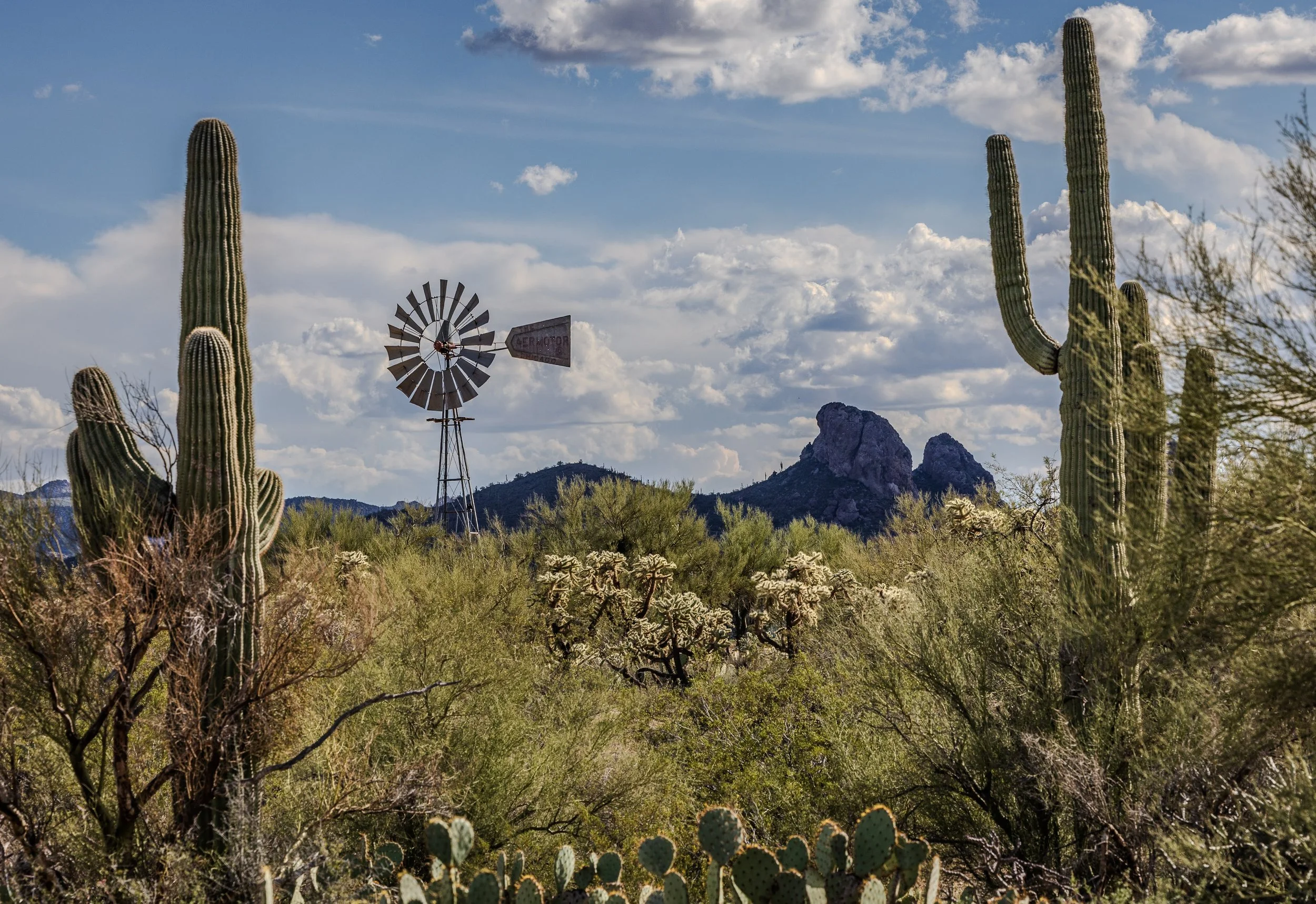
Saguaros off of E Park Link Dr, north of Tucson, AZ.
I was recently able to visit an aunt and uncle I hadn’t seen in nearly 20 years outside Tucson, AZ. I had never been to that part of the American Southwest, so I knew I wanted to see the Saguaro National Forest. I was struck by just how beautiful the desert can be, especially in February when daytime highs are in the 70s! Saguaro cacti are fascinating. Did you know that their lifespan can average 150-200 years? The ones that grow “arms” typically don’t do so until near the 75 year mark. If my source of data is correct, the largest living saguaro currently clocks in at 45 feet tall, with a girth of 10+ feet, and an estimated age of 200 years. The tallest ever recorded was an armless saguaro that reached a massive 78 feet tall!
As I learned more about the saguaro, what impressed upon me most was how much this unlikely spined succulent could serve as a metaphor for the caregiver. Let me explain…
Saguaros can retain large amounts of rain water which nourish them and other creatures for long extended periods of waterless heat.
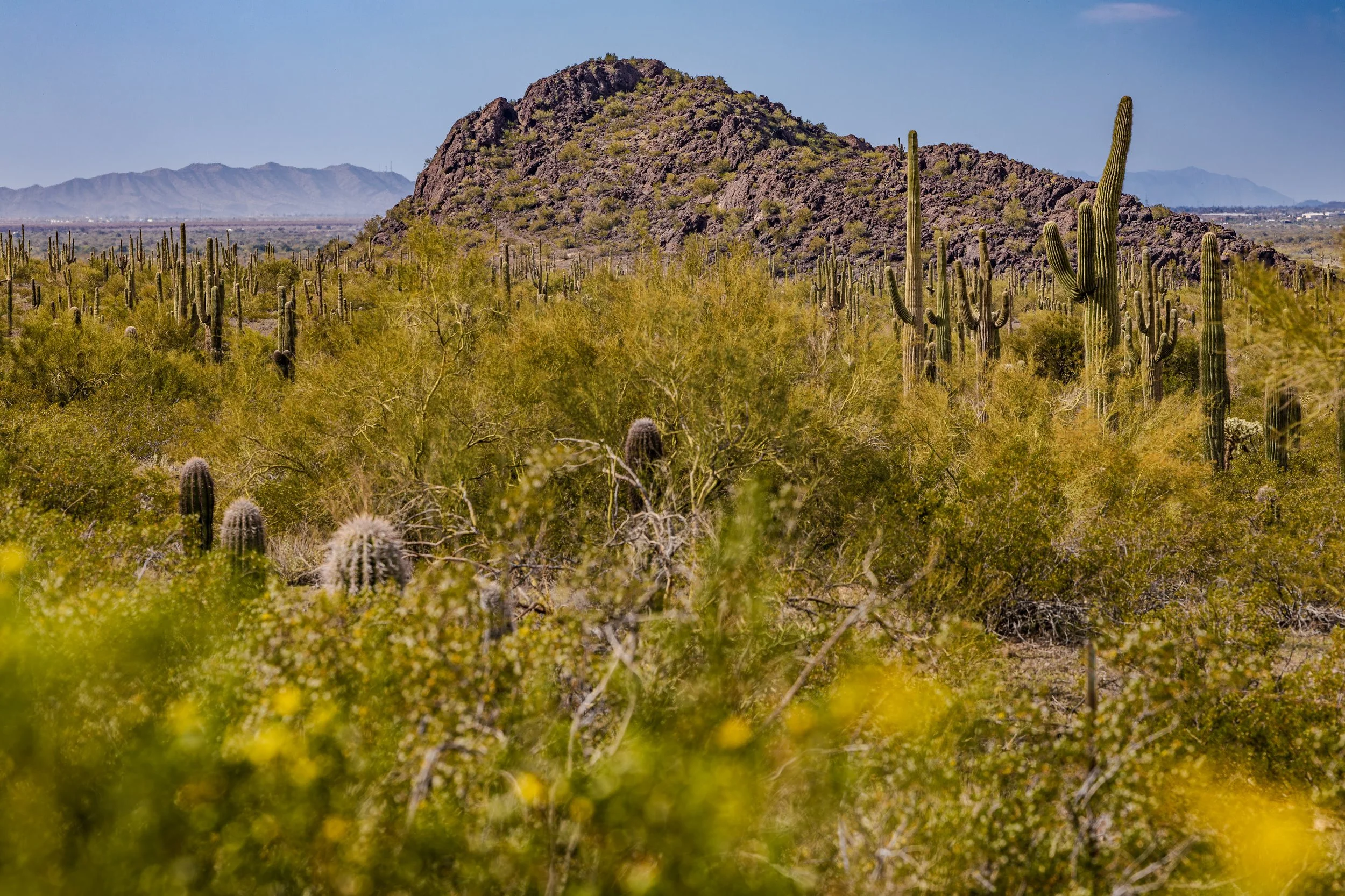
Saguaros outside Picacho Peak State Park
Caregiving can often be thought of as a desert experience. Caregiving is a privilege, honor, and sacred calling that can be full of wonderful blessing. But let’s face it, it is also deeply challenging and full of long and extended periods of emotional and spiritual barrenness. What has profoundly affected me, however, is how many caregivers I have met who have retained supernatural “water” for unthinkable stretches of aridness, and been able to serve faithfully out of that spiritual reserve. This is, of course, a work of the Holy Spirit who promises to make the “valley of Baca” a “place of springs” as we pass through it (see Psalm 84).
However, this truth underscores the importance of caregivers pausing to drink deeply of the rain water when it falls! We need these desert downpours, they are critical to the endurance required of our calling (Think spiritual retreats, respite breaks, Sabbath moments).
Saguaros provide shelter for some species of desert birds (Gila woodpeckers, gilded flickers, finches, owls, etc) whose habitation leaves a scarred and calloused sack of tissue in the saguaro known as a “boot”. The saguaro boot outlives the cactus itself and has served native Americans as a means of storage as well.
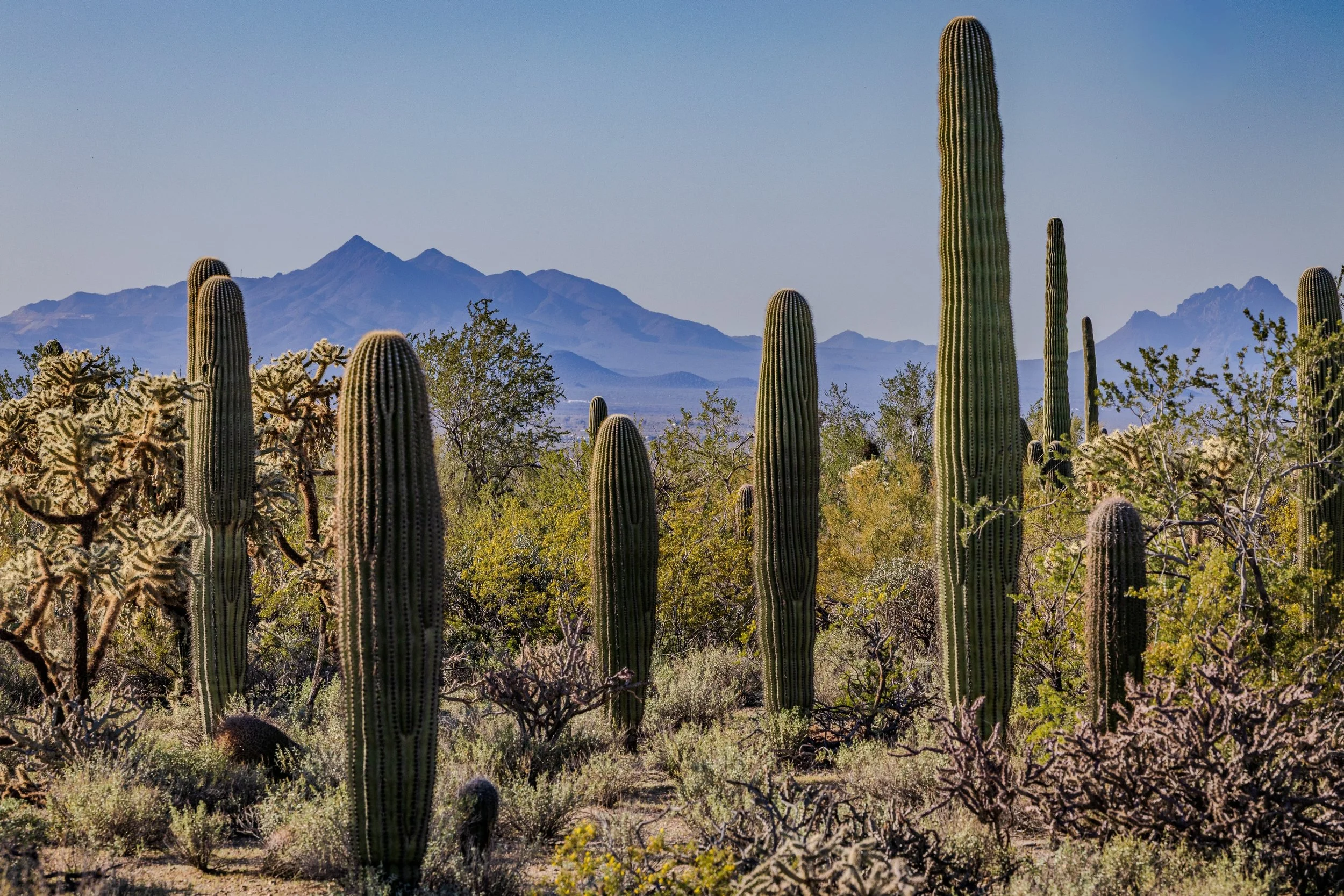
“Armless” saguaros in the Saguaro National Forest
As caregivers, we can become a place of refuge for the loved ones for whom we care. There is an entirely other desert being experienced in the mind and physiology of someone experiencing dementia, cognitive decline, or some other from of prolonged disability. As family caregivers, we often become their only shelter from uncertainty and anxiety, which can take a definite toll on us. We develop calloused and scarred tissue (sometimes a necessary defense), which can outlive our caregiving calling. This isn’t all bad - the scars, the “boot” if you will, can become an incredible resource to others who are also walking that journey. Though the caregiving season eclipsed for me and Tina, we both carry our own scar “boots”. Yes, they remind us at times of painful moments and difficult memories, but they also serve as a means of storing these experiences and learnings that can then be passed on to others. So can yours!
The saguaro provides voluminous amounts of pollen, nectar, and fruits. The fruits are eaten by the white-winged dove and ants, so that seeds rarely escape to germinate. The fruit have also been harvested by the O'odham peoples of the Northern Sonoran Desert for generations.
I actually was able to try some Saguaro fruit syrup while in Arizona. The O’odham people still have exclusive rights within the Saguaro National Forest for harvesting the fruit that emerge from the blossoms at the very tops of the cactus. What caught my attention, however, was that one comment that “…seeds rarely escape to germinate”. In caregiving, there is often this sense that time is standing still. You see the lives of people you know move on around you, progressing through all the normal experiences of life and growth, but you feel yourself stuck. You feel like any seeds of hope, adventure, accomplishment that you cast out there fail to germinate. The calling consumes everything you have to give.
I am comforted and encouraged when I read Jesus’ own words in John 12:24:
“Truly, truly I say to you, unless a grain of wheat falls into the earth and dies, it remains by itself alone. But if it dies, it bears much fruit.”
It’s believed that at least 60% of a desert white-winged dove’s diet is derived from the Saguaro cactus. Perhaps less than 1% of a Saguaro’s seeds germinate, but the nourishment provided by its perennial flower and fruit can’t be denied. Our apparent stasis in life, and our ability to surrender to the sacrificial calling of caregiving produces a fruit that is eternal, and that keeps bearing “much fruit”.
Saguaros have a very large root network that can extend up to 30 m (100 ft), and long taproots of up to 1 m (3 ft 3 in) deep.
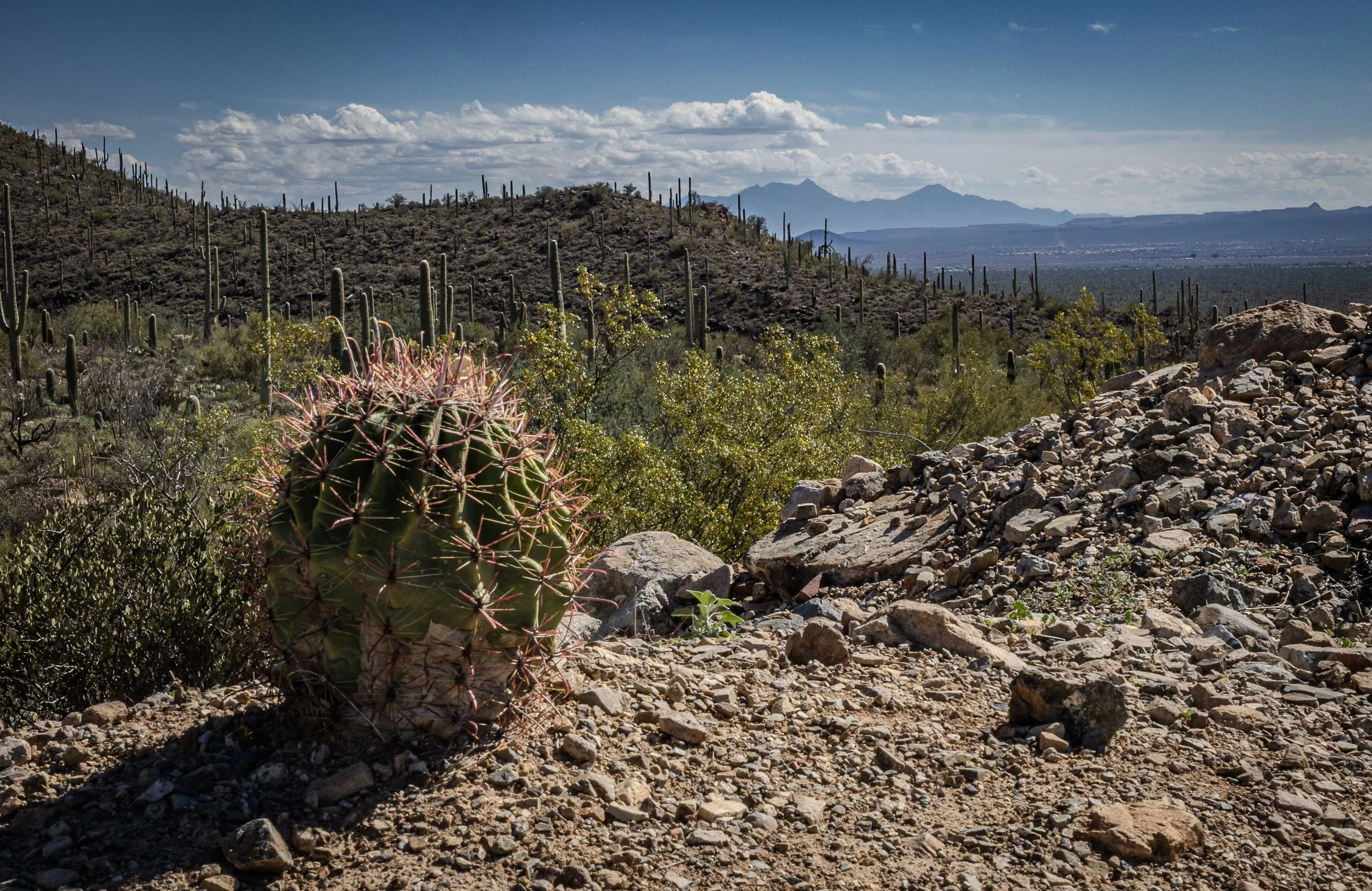
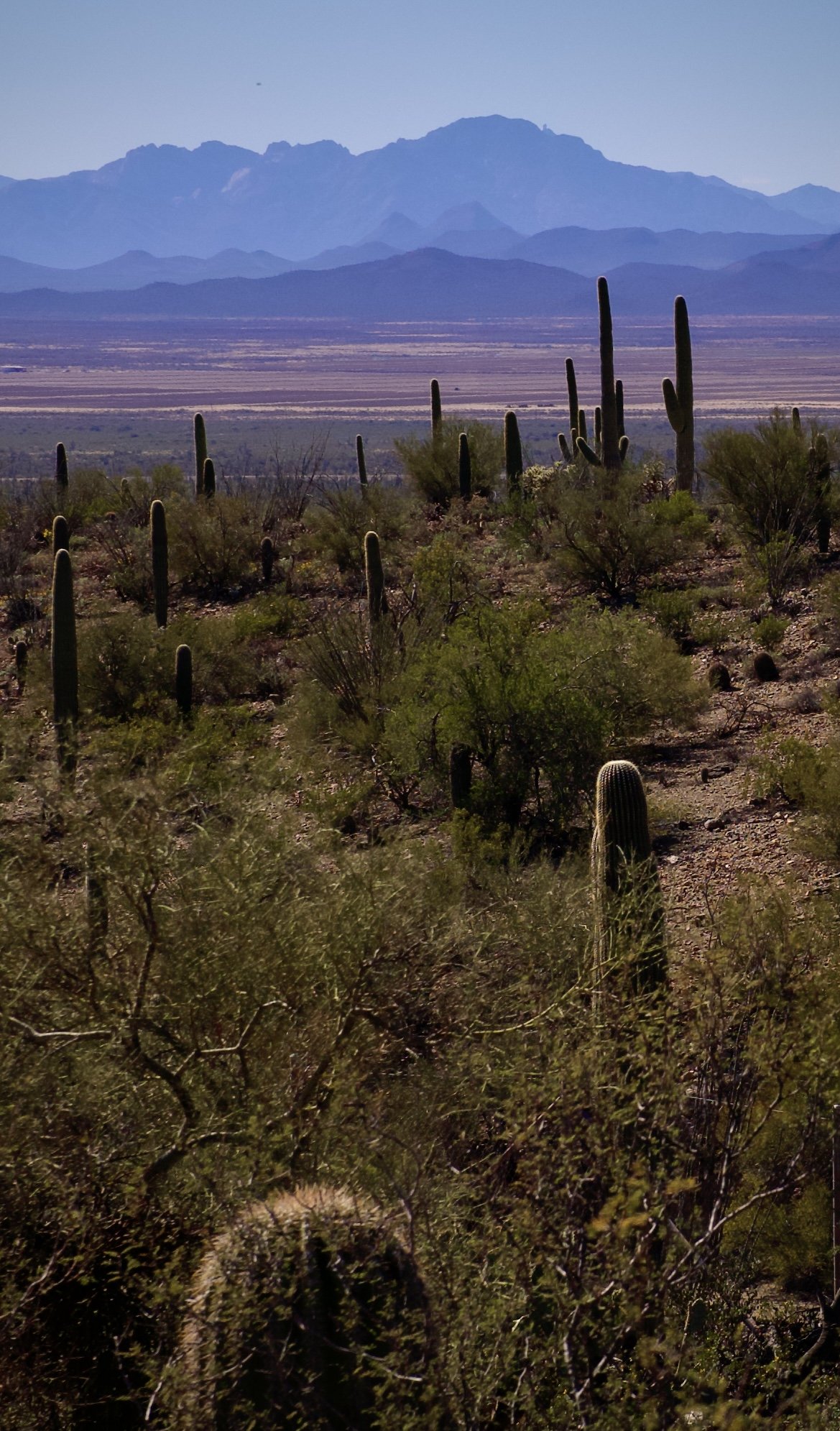
Saguaros poking up from the hills of the Saguaro National Forest
This last point is more of an admonition. One of the undeniable reasons the Saguaro can withstand such extremes and live such an expansive lifetime is its broad and deep root system. One of the first things we struggle to maintain as caregivers is social connectedness. Yet, it is one of the most essential things to help us stay empowered for the long course ahead. Many caregivers we’ve spoken to are able, in the face of lost social and family connections, to establish “new root systems” with other caregivers. Many of these include online support groups and sometimes local in-person support groups. When Tina’s mom, Nola, was in Memory Care, we found ourselves getting to know some of the other families whose loved ones were in the same hall. We also were able to develop a deep friendship with the owner of a local coffee shop where we would take Nola - her mother had passed from Alzheimer’s, and she had been her caregiver. We were able to forge a family connection there that would have never been possible otherwise.
I don’t know what those new roots look like for you in your circumstance, but I know that God knows exactly what we need, and if we ask Him, He will provide life-giving connections. He may call you to help instigate some of those connections. It’s worth it, don’t miss the opportunity to find shared strength in a community of fellow sojourners.
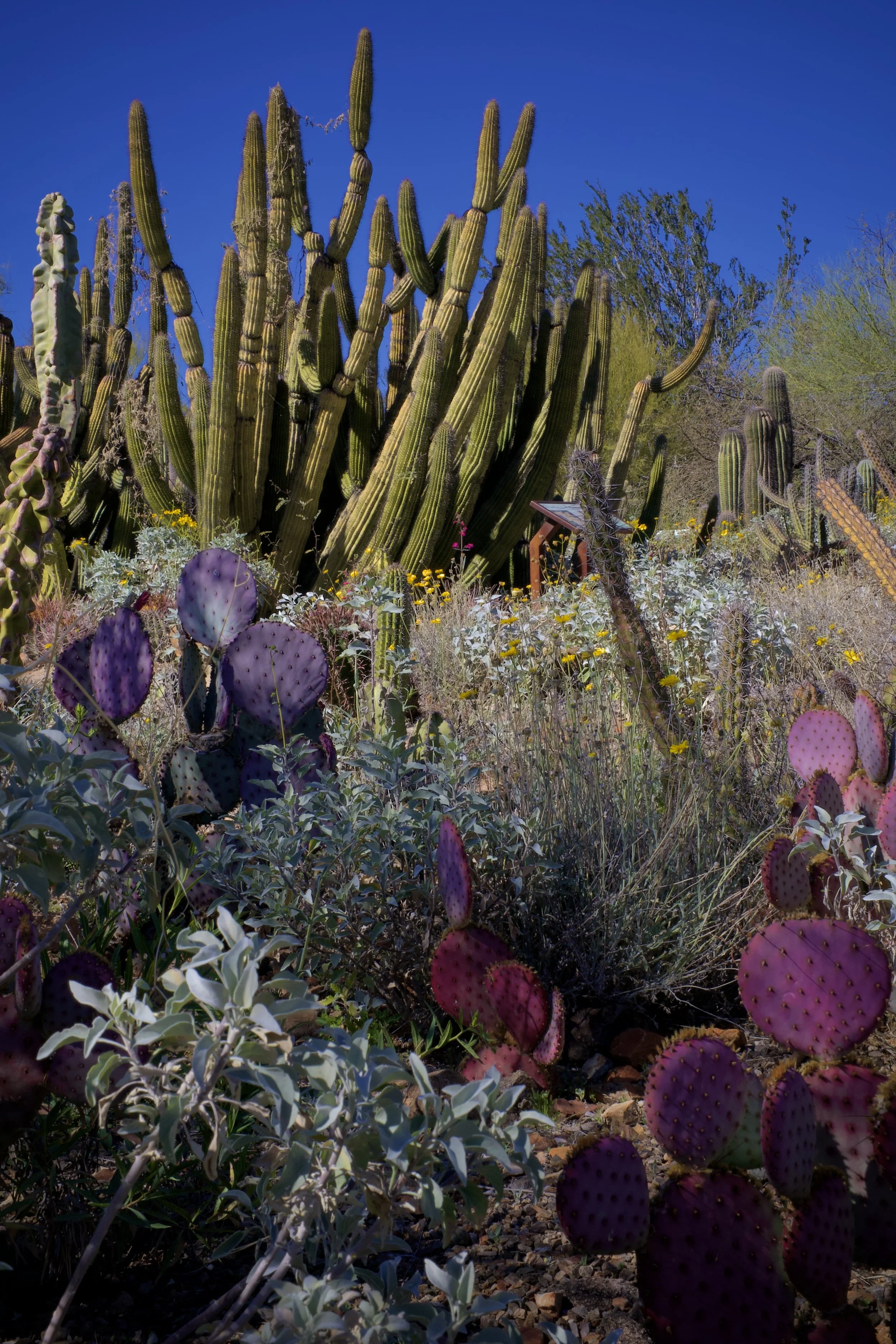
There are many more interesting facets of the emblematic Saguaro that I could share, but I think the most profound one I want to leave you with is this: the desert can produce unexpectedly beautiful things. Caregiving is something few of us endeavor for our lives, or for our loved ones, but it is one of the most defining experiences you can walk through. With the loving kindness of Christ, it can be transformative, turning desert wastelands into “pools of refreshment”.